
Lipedema vs Lymphedema
Lipedema
Fluid-filled adipose buildup
Lymphedema
Confusing Conditions
Understanding the Two Different Conditions
Both conditions involve swelling and fluid buildup in the limbs — but they arise from completely different mechanisms, affect different populations, and require different treatment approaches. Misdiagnosis between the two is common and can lead to years of ineffective treatment.
Lipedema
Symmetrical fluid-filled adipose buildup in specific body regions
Fat distributed in irregular, symmetrical ways beneath the skin, collecting fluid within fatty tissues
Always presents bilaterally — both legs or both arms are affected equally
Not initially as severe — only in critical stages does it endanger the lymphatic system
Lymphedema
A blockage in the lymphatic system means fluid cannot drain properly from the body from the start
Side-by-Side
Attribute-by-attribute Comparison
The following table outlines the key clinical differences between lipedema and lymphedema across the most diagnostically relevant attributes.
Lipo-lymphedema
Can You Have Both at the Same Time?
Yes — this is called lipo-lymphedema
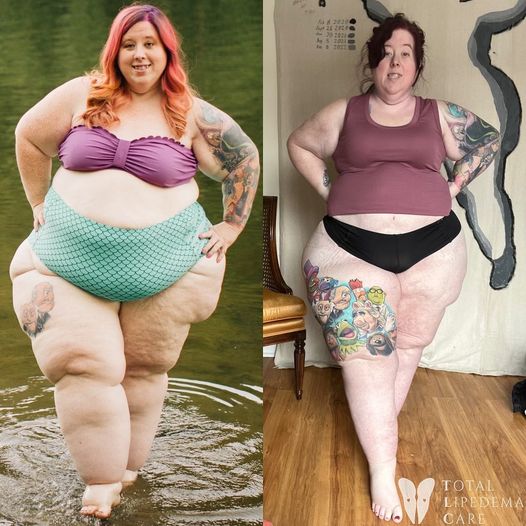
In advanced stages, lipedema can progress into lipo-lymphedema — a combined condition where the lipedemic fat accumulation has grown so extensive that it begins to compromise the lymphatic system. This is Stage IV lipedema.
At this stage, the distinction between the two conditions becomes clinically blurred. The patient may begin to show signs of lymphedema — including pitting edema and lymphatic insufficiency — in addition to the existing lipedema presentation. This is why early diagnosis and intervention is critical: catching lipedema at Stage I or II prevents the progression into this more complex combined state.
Dr. Schwartz will do what is necessary to provide you with a diagnosis that is appropriate for you — accounting for the full clinical picture, including the possibility of overlap between these two conditions.
Self-Assessment
Which Condition Might Match your Symptoms?
This is not a clinical diagnosis — only Dr. Schwartz can provide that. But this short quiz can help you understand which condition’s profile more closely matches what you’re experiencing, and prepare you for your consultation.
Lipedema vs Lymphedema — Symptom Profile
Answer each question honestly. Results help orient your consultation, not replace it.
Next Steps
Why Accurate Diagnosis Matters so Much
Because lipedema and lymphedema require completely different treatment pathways, an inaccurate diagnosis can lead to years of ineffective interventions. Standard compression garments used for lymphedema may provide some relief for lipedema, but they do not address the underlying pathological fat — and surgical approaches differ significantly between the two.
Dr. Schwartz has extensive experience diagnosing and treating both conditions — as well as lipo-lymphedema, the advanced combined state. He will review your full clinical picture, including the distribution pattern, tissue composition, response history, and personal and family history, before confirming a diagnosis.

Dr. Schwartz wants you to know that he will do what is necessary to provide you with a diagnosis that is appropriate for you.
Not sure which condition you have?
Dr. Schwartz will provide a diagnosis appropriate for you — in person or via telehealth.