A quick heads up before you scroll. This guide includes real photos and video from inside the operating room, including lymphatic sparing liposuction and Manual Lipedema Extraction. The images are honest, which means some of them show fat, fluid, and tissue leaving the body. If that is not for you, there is a photo-free version of this post right here. You get every bit of the same information, just without the visuals. Read it whichever way feels right.
If you are reading about lipedema surgery, odds are you have already spent years working to manage the condition.
So, now you are here for the real answer to the question no one has bothered to give you straight: how does this actually work, and is it any different from the liposuction you have heard about?
Here is the short version.
Warm fluid goes in. A blunt cannula slides under the skin and follows the lymphatics instead of tearing through them. The loose fat comes out. Then the step that sets this surgery apart from anything cosmetic: the dense, fibrous nodules a cannula cannot grab get pressed out by hand, one stubborn pearl at a time. What you are left looking at is a softer, lighter limb and, for most patients, a lot less pain. Below is what each of those moments actually looks like.
WHY THIS ISN’T COSMETIC LIPOSUCTION
Lipedema fat behaves nothing like the fat a cosmetic surgeon sculpts away for a flatter stomach. It hurts when you press on it. It bruises if you bump a coffee table. It clings to your legs, hips, buttocks, and sometimes your arms no matter how clean your diet is or how many miles you run.
Roughly 1 in 9 women has it, and most spend years being told to just lose weight before anyone says the word lipedema out loud.
So lipedema reduction surgery starts from a completely different goal. Cosmetic liposuction is spot reduction for looks. This is the removal of diseased fat while protecting the lymphatic system underneath it, so the pain eases and you can move again. Dr. Schwartz measures success in pain levels and mobility, not in inches off a tape measure. That single difference shapes every step you are about to see, from the size of the cannula to the way the nodules come out.
WHAT YOU SEE FIRST: MARKINGS AND FLUID
It starts before anyone touches the fat. Standing up, your legs get drawn on like a roadmap, because gravity shows the true shape and exactly where the disease sits. Photos and measurements go in the chart to track progress over time.
Then, in the operating room, warmed tumescent solution goes into the tissue. It is a mix of saline, local anesthetic, and medication that constricts blood vessels. As it fills the fat layer, the limb visibly swells and firms up, the area goes numb, and bleeding drops way down. Floating the fat apart this way also separates the delicate lymphatics so they are easier to work around later.
This is also why so many of Dr. Schwartz’s patients skip general anesthesia. With the right tumescent technique and light sedation, the surgery can happen while you are comfortable but not fully under, which is gentler on your body and faster to recover from.
Why The Fluid Goes In Warm
Cold fluid makes you shiver and tightens the tissue. Warming it keeps you comfortable on the table and keeps the fat soft and easy to release, which sets up a cleaner removal in the next step.
WHAT LYMPHATIC SPARING LIPOSUCTION LOOKS LIKE
Now the cannula. The thin tube you will see moving under the skin is blunt-tipped, not sharp, and it is doing something very specific: tracing alongside the lymphatic channels rather than ripping through them. Traditional liposuction is aggressive and indiscriminate. This is slow, deliberate, and water-assisted, working mostly in the superficial and middle layers of fat while leaving the deeper structures alone.
Dr. Schwartz often describes his approach with the SAFE method. Separation is the fluid step, gently floating the lymphatics and blood vessels apart. Aspiration is the removal itself, suctioning lipedema fat with blunt cannulas that follow the lymphatics instead of cutting across them. Fat equalization comes last, where the area is smoothed out without suction so the contour heals evenly. The fat you will see collecting in the canister is the loose, mobile fat. The harder stuff is still in there, and that is the next problem to solve.
The video below shows lymphatic sparing liposuction being performed on a patient.
The Difference A Blunt Cannula Makes
A sharp cannula cuts whatever it meets, lymphatics included. A blunt one pushes past the structures you want to keep and dislodges the fat you do not. In a limb where the lymphatic system is already struggling, that choice is the entire point of the procedure.
WHERE MANUAL LIPEDEMA EXTRACTION TAKES OVER
This is the part you will not see in a standard liposuction video, and it is the reason patients fly to Beverly Hills from all over the world.
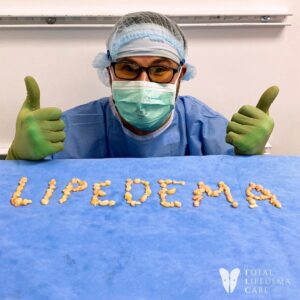
After the loose fat is gone, dense little nodules stay behind, packed just under the skin. Patients and clinicians call them lipedema pearls. They cling to the connective tissue, they are far too firm and fibrous for any cannula to suck out, and they sit right at what Dr. Schwartz calls the epicenter of lipedema pain. Leave them in and you have removed volume without removing the ache.
So he takes them out by hand. Manual Lipedema Extraction, a technique exclusive to his practice, uses deep, deliberate pressure, close to a forceful manual lymphatic drainage, to knead and milk those nodules out through the same tiny incisions already made for the liposuction. On video it looks almost like squeezing, because that is essentially what it is.
The video below shows what this process looks like.
What A Lipedema Nodule Actually Looks Like
Up close, the extracted nodules look nothing like normal yellow fat. They come out white, rubbery, and fibrous, often clustered together like beads. Patients are frequently stunned to see them, because these are the exact spots that hurt to sit on, stand on, or sleep against. Watching them leave the body is, for a lot of people, the most satisfying moment in the whole guide.
WHAT RECOVERY AND RESULTS LOOK LIKE
The incisions are small and usually left open for a day or two so excess fluid can drain, which actually speeds up healing. Compression garments go on almost immediately to control swelling and help your skin settle over the newly reduced shape. Expect bruising and swelling at first. It looks dramatic in week one and fades over the following weeks and months.
Most patients also start gentle walking early and keep up manual lymphatic drainage to keep fluid moving. One thing to plan for from the start: lipedema usually takes more than one surgery. Treating a couple of areas at a time is safer and heals better than trying to do everything in a single marathon session, so your results arrive in stages rather than all at once.
How Much Better It Actually Gets
In a study of 62 women treated with Dr. Schwartz’s combined approach, known as the SMiLE technique, patients reported pain dropping by about 74 percent and mobility improving by roughly 93 percent. Now the honest part: surgery does not cure lipedema. New fat can still appear, and compression and self-care stay a part of life. What it does is strip out the diseased fat and the painful nodules so daily living gets dramatically easier, and for most patients that trade is life-changing.
READY TO SEE WHAT’S POSSIBLE FOR YOU?
If your legs feel heavier every year and nobody has been able to tell you why, you do not have to keep guessing. The team at Total Lipedema Care can confirm whether you have lipedema, walk you through both conservative care and surgery, and build a plan around your stage and your life. Call 888-LIPEDEMA or schedule a consultation here.